In the Scottish Hebrides they knew to seal the west-facing windows. In western Kansas, nobody does. The wind blows from the west every day. The sunset is from the west. Every house on the plain has windows facing every direction. Every door.
Cass Whelan is fourteen. She wears her dead grandmother’s canvas barn jacket. The jacket still smells like Helen’s hand lotion and hay and the old tractor seat. As long as Cass wears it, Helen is not fully gone. The Whelan farm is being dismantled piece by piece, and nobody in the family has said goodbye to anything yet.
On October 24th, Cass sees what she thinks is a murmuration of starlings in the bruise-colored sunset over the north quarter. Her friend Marco, whose grandmother in Chihuahua had her own stories about spirits that fly, looks up and says: The birds aren’t birds.
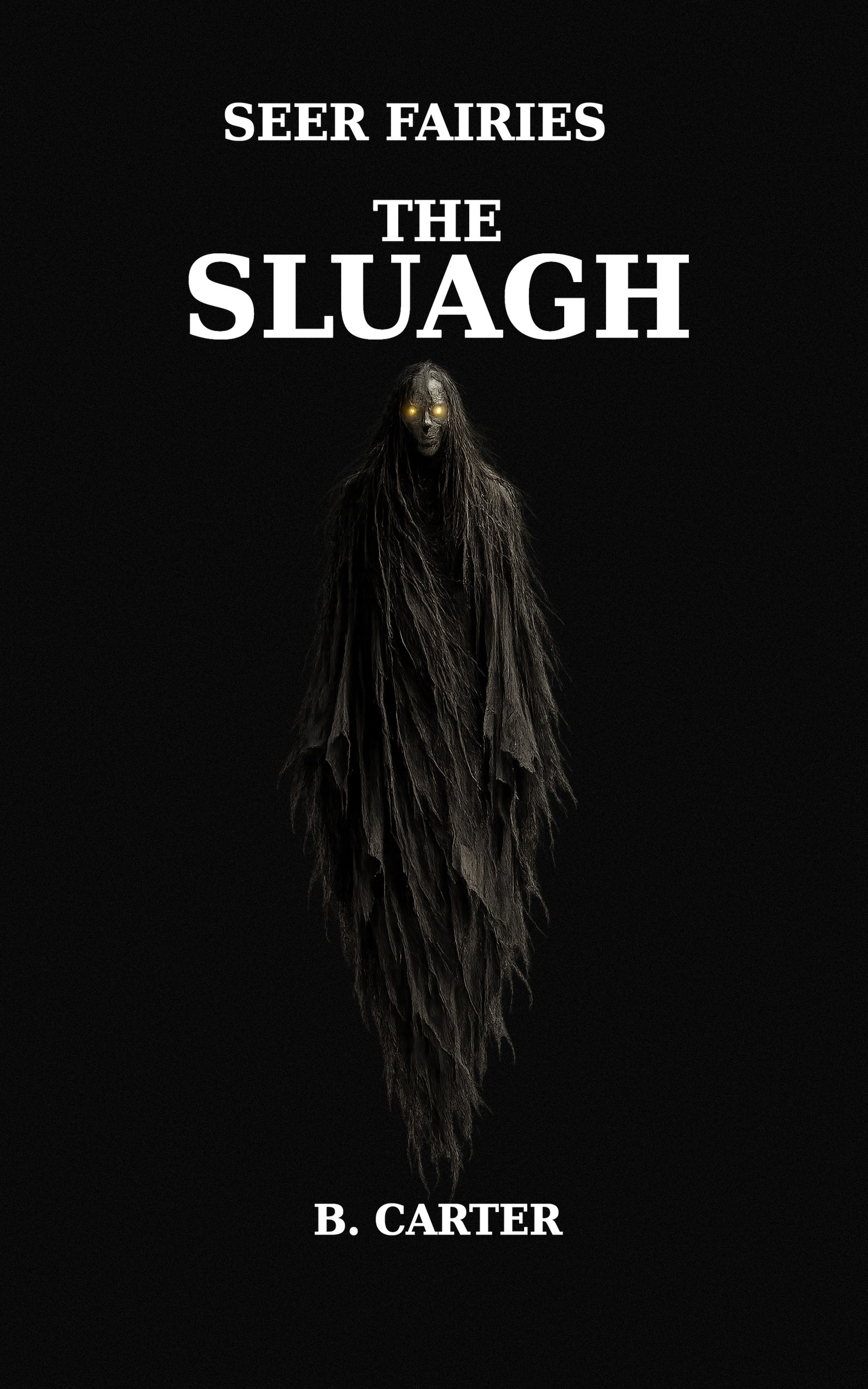
The Sluagh — the Host of the Dead — are the unforgiven souls who fly in crescent formation from the west, hunting the dying and the grieving. They can smell an unsaid goodbye the way a dog can smell fear. And in Dryden, Kansas, there is a whole town full of them.
This is the book where the Seer does not always win.
The sunset was the color of a bruise. Purple and yellow and the kind of red that meant weather coming. Cass had been mending fence on the north quarter when the wind had shifted half a point and the light had gone wrong.
She looked up.
At first she thought it was starlings. A murmuration. She had seen them do it before over the wheat fields in October — the big shape pulsing and folding, the edges rippling, the whole formation turning as one thing even though it was thousands of birds. It was the kind of thing that made you stop working and watch because it did not look like anything else in the world.
This did not look like anything else in the world.
But the birds were not birds. The shape was wrong. The formation was holding a crescent — a sharp, deliberate crescent, the curve of a sickle, the tips of the horns pointing downward at the earth — and it was not pulsing. It was steady. It was aimed.
It was coming out of the west.
Marco was standing next to her at the fence and he had put down the wire cutters without Cass noticing. She heard his voice say, very quietly, the thing his grandmother in Chihuahua had said once when Marco was small and a shape had passed over their house in the dark.
“The birds aren’t birds.”
Field Notes — The Sluagh
What it is: Sluagh na Marbh — the Host of the Dead. The unforgiven souls, denied entry to heaven, hell, or afterlife because they died with unfinished business. They fly in crescent formation from the west, resembling a murmuration of grey birds. They are not individual monsters. They are a collective. The host never shrinks.
How it picks you: It smells the incompleteness. Unsaid goodbyes. Unpaid debts. Unspoken words. Unprocessed grief. The stronger the incompleteness, the stronger the pull.
How to spot it: A murmuration that should be birds but is holding its shape too precisely. A crescent formation, tips pointing down. Wind from a direction that is not the compass west — wind from wherever the unfinished thing is. In Kansas, in late October, fourteen hours of dark.
How to survive it: Seal the west-facing window — where “west” is wherever the grief lives, not a compass point. Iron across the opening (old iron, not modern steel — the carbon content matters). Daylight dissolves them. A completed soul is invisible to them: someone who has said their goodbyes, paid their debts, spoken their truth.
What it costs if you get it wrong: The taken join the host. Every soul stolen becomes a new hunter. In Dryden, the host does not raid. The host settles.
Who’s Who
Cass Whelan
14. Tall, sunburned, calloused hands. Wears her dead grandmother’s canvas barn jacket every day. Re-braids her hair when nervous. Reads the sky the way other people read a book. The unbraided hair is the fracture.
Diane Whelan
42. Cass’s mother. The executor. Has been dismantling Helen’s life with bureaucratic precision — selling the tractor, the combine, the cattle. Each sale is a goodbye Diane can perform without saying the word. Cries in the bathroom with the water running.
Tom Whelan
45. Cass’s father. Born in Dryden. Will die in Dryden if nobody stops him. Sits on the porch at dusk and watches the western sky and says nothing. Promised Helen he’d take care of the farm. The promise is the debt. The debt is unpayable.
Marco Reyes
14. Cass’s friend. Practical, funny, unafraid of work. Son of a ranch hand on the Cargill-leased operation. Carries a different tradition’s awareness of airborne danger. He is the one who says: The birds aren’t birds.
Agnes Halvorson
78. Third-generation Norwegian-American. Doesn’t know the Sluagh by name, but knows the Oskorei — Odin’s host of the dead riding through the winter sky. Has been closing her west-facing windows every October for sixty years. Her neighbors think she’s eccentric.
The Seer
The pull points to Kansas. The wind points to Kansas. The Seer arrives in Dryden carrying iron she brought from a church in the Hebrides and the cold knowledge that the host cannot be destroyed — only turned away. This is the book where she does not always win.
The host does not depart. The host settles.
This site uses essential cookies for basic functionality. Non-essential cookies (analytics, preferences) are only set with your consent. See our Privacy Policy.