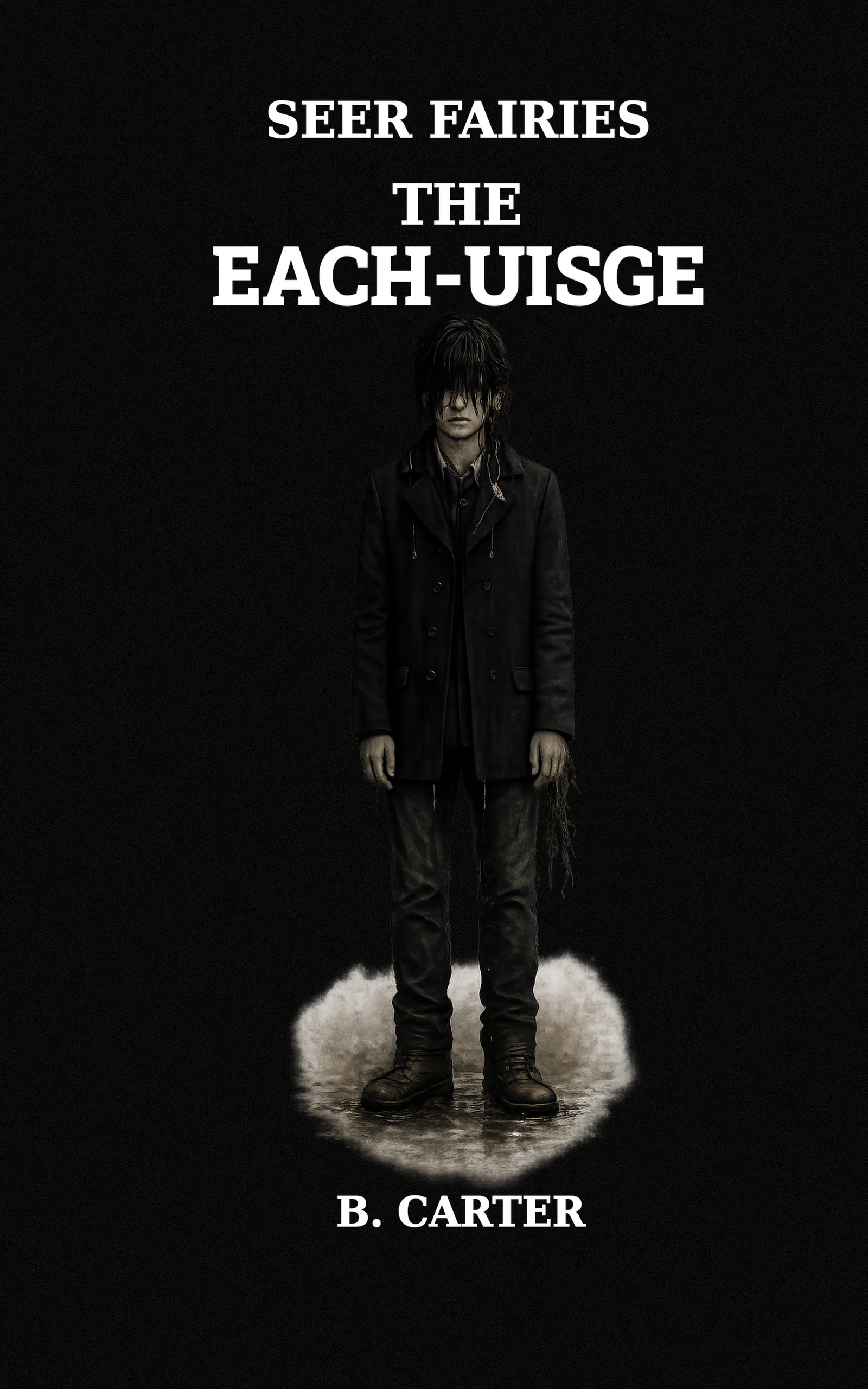
In Scotland they knew to check a stranger’s hair for weeds. They knew to check a horse’s feet for hooves. They knew that a single finger on its hide was enough, and that the wanting was the adhesive.
Millbrook, Tennessee, sits on the shore of Carvell Reservoir — a man-made lake the TVA built in 1948 by damming Carvell Creek and flooding the valley. Old Millbrook is still down there. Sixty feet under. In drought years the steeple of the old Methodist church breaks the surface like a finger pointing at the sky. Everyone in the new town has a family story about what’s under the water. The lake is the town’s identity. The lake is the town’s wound.
Wren Calloway is thirteen. She wears her father’s fishing vest over everything. Aaron Calloway drowned in the reservoir two years ago — night fishing, boat capsized, body never recovered. Wren rows his aluminum johnboat to the deep spot every morning before school. The lake is her first language. The lake took her father. She speaks it anyway.
Then a black horse appears in the shallows. Fetlock-deep in water that does not ripple around its hooves. A boy named Evan arrives at the marina with damp hair and no road that led him there. They are not two things.
Travis Okafor is the sheriff’s recovery diver. He has pulled eleven bodies from this lake in twelve years. He keeps a private logbook of the rules. The bridle is the weakness. Iron is the kill. The lake, he has decided, is not a lake.
This is the book where the Seer successfully destroys a fae. The cost has been decided. The lake remains: occupied.
The horse was standing in the shallows on the east side of the cove, fetlock-deep in water that did not ripple around its legs.
Wren brought the johnboat in to forty feet and let it drift. She knew the cove the way she knew the stairs to the loft bedroom — which ones creaked, which ones held, which ones to skip. The east side was eight feet at the drop and thirty by the time you were to the old channel marker. The horse was in three inches.
Water did not ripple around its hooves.
She counted. Hooves do not sit in water without displacing it. Even a heron standing still makes a ring. The horse’s legs looked painted on — four dark pillars ending in black hooves with water holding itself carefully around them the way a floor holds itself around the legs of a chair.
The horse turned its head. Looked at her.
Its eyes were not gold. Its eyes were the color of the deep water at the old channel — the color Wren had been staring at every morning for two years because Aaron was under that color somewhere. Her father’s eyes had been brown. The horse’s eyes were: the lake.
Wren reached for the oars without looking at them. Her hands knew where the oars were. The hands were moving. The hands kept moving. The hands did not stop until she was fifty yards out and the horse had walked back up the bank into the tree line and the water where it had been was smooth and unbroken and showed her the sky.
She sat in the boat breathing. The fishing vest was warm. The pocket with the Swiss Army knife pressed against her ribs like an arm. She said the thing she had been saying to the lake every morning for two years without saying it out loud.
If you have him, I want him back.
The lake, for the first time, had heard.
Field Notes — The Each-Uisge
What it is: A Scottish Highland water horse. Not a kelpie — the kelpie lives in rivers, the each-uisge lives in lochs and the sea. Appears as a magnificent horse or a handsome young man. Its skin becomes adhesive when it senses water. It bolts for the deepest point of the nearest body of water and drowns the rider. It devours the entire body except the liver, which floats.
How it picks you: It bonds not to your skin but to your wanting. The more you want something it has offered — a ride, companionship, the return of something lost — the stronger the bond. Touch without desire is safe. Touch with desire is permanent.
How to spot it: Wet hair in human form — seaweed, sand, the smell of lake water. Hooves that never fully change. Boots help. Boots come off. In horse form, hooves that stand in water without displacing it. Eyes the color of the water it came from.
How to survive it: Steal the bridle at dawn. Iron kills it — iron weapons, iron hooks, iron heated red-hot. The Raasay blacksmith method is documented in Campbell’s Popular Tales of the West Highlands. On dry land, far from any body of water, the creature is diminished. In Millbrook, Tennessee, the reservoir is visible from every point in town. There is no far from water.
What it costs if you get it wrong: Everything except the liver. The liver floats. In ancient folk medicine, the liver was the seat of passion, love, and desire — the organ of wanting. The each-uisge cannot consume the organ of wanting because the wanting is what feeds it. The liver is not the remnant. The liver is the receipt.
Who’s Who
Wren Calloway
13. Small, wiry, the build of a girl who has been rowing since she was nine. Dark hair, short (she cut it after Aaron died). Wears her father’s fishing vest over everything. The vest smells like Aaron, like the lake, like: both things Wren cannot separate. Rowing is her silence.
Aaron Calloway
Wren’s father. Drowned in the reservoir two years ago. Night fishing after a fight. The boat capsized. Blood alcohol 0.14. The vest that could have saved him was in the truck. Never recovered. The reservoir is 180 feet deep at the old channel and the current at the bottom moves things that don’t always come back up.
Beth Calloway
39. Wren’s mother. Nurse at the county clinic in Clinton, twenty miles east. Has processed Aaron’s death the way a nurse processes: clinically. Knows the numbers. Has not processed the feelings. The last thing she said to Aaron was “Then go. Go fish.” Aaron went. Aaron died. Go is the word Beth carries.
Travis Okafor
Sheriff’s recovery diver. Eleven bodies in twelve years. Keeps a private logbook of rules he has learned about the reservoir that no training manual covers. The bridle is the weakness. Iron is the kill. The lake, he has decided, is not a lake.
Evan
Arrives at the marina one morning with damp hair and no recorded road. Polite, quiet, handsome in a way the teenagers notice immediately. He knows the lake better than he should. His boots never quite come off all the way.
The Each-Uisge
A black horse in the shallows. Fetlock-deep in water that does not ripple around its hooves. Eyes the color of the deep water at the old channel. Patient. It has nothing but patience. It can serve faithfully for years. One glimpse of water activates the bond. The trust was the longest con.
The Seer
The pull points to Tennessee. To a reservoir filled with drowned things surrounded by people who want those drowned things back. This is the book where the Seer successfully destroys a fae. Bring iron from the drowned church. The water horse dissolves to jelly. It was never fully solid. It was water pretending to be flesh.
The wanting is the adhesive.
This site uses essential cookies for basic functionality. Non-essential cookies (analytics, preferences) are only set with your consent. See our Privacy Policy.